

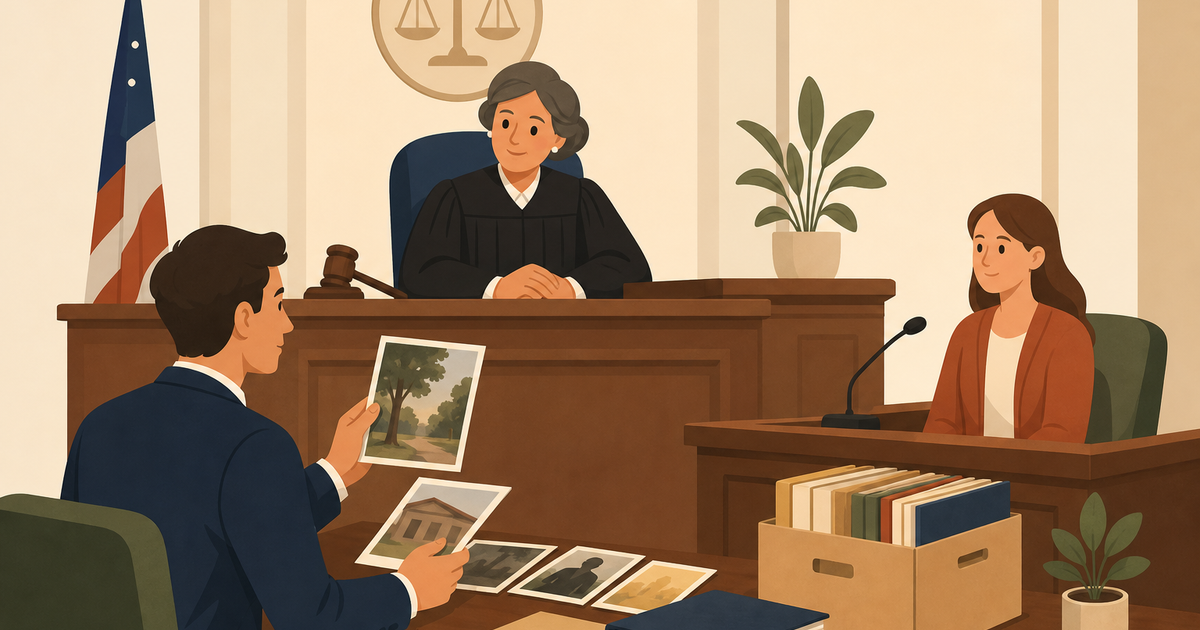
Your Day in Court: How a Small Claims Trial Actually Works in Ontario
Ontario's Small Claims Court handles monetary disputes up to $50,000 (the limit since October 1, 2025) — unpaid invoices, botched renovations, broken contracts, unreturned deposits. Most cases settle at or before the settlement conference. But if yours does not, the next stop is a trial, and knowing what actually happens in that room is half the battle.
How You Get There
By the time a trial is scheduled, a lot has already happened: you filed a claim, the defendant had 20 days to respond, and both sides attended a settlement conference where a judge tried to narrow the issues or resolve the case. (We cover that stage in detail in our settlement conference guide.) Only cases that survive all of that reach trial.
What Happens at Trial
A small claims trial is simpler than a Superior Court civil trial, but it is still a real trial in front of a judge:
- The plaintiff goes first. You present your version of events, show your evidence — contracts, invoices, photographs, text messages, emails — and call any witnesses.
- Witnesses can be questioned. Both sides may call witnesses and cross-examine the other side's witnesses.
- The defendant responds. They tell their side, present their own documents, and call their own witnesses.
- The judge decides. Sometimes on the spot, sometimes in a written decision later.
The burden is on the plaintiff: you must prove the defendant caused your loss and prove the amount. A claim with a clear paper trail and organized exhibits routinely beats a bigger claim built on recollection and indignation.
The Mistakes That Sink Cases
The same errors appear over and over: evidence that was never served on the other side or brought in the required form; the key witness who "couldn't make it"; damages claimed with no documents to support the number; and parties who argue with the judge instead of answering questions. Preparation — an organized brief of documents, witnesses confirmed, a short chronology — is what separates the two sides in most trials.
Costs, and What Comes After
Winning is not automatic collection: after judgment you may still need to enforce it. And losing has a price — the court can order the losing party to pay costs. Appeals are limited; among other restrictions, an appeal is generally only available where the amount involved exceeds $5,000.
You Do Not Have to Do It Alone
You are allowed to represent yourself in Small Claims Court — but you are also allowed to be represented, and licensed paralegals appear in this court every day. If the dispute is worth suing over, it is usually worth preparing properly.
This article is general information only and is not legal advice. Every case turns on its own facts.
Small Claims Representation at WP Legal Professional
From drafting the claim to the settlement conference to trial, WP Legal Professional represents plaintiffs and defendants in Small Claims Court across the Greater Toronto Area — in English, Cantonese, Mandarin, and Korean. Learn more about our small claims services.
Act now. Contact us for a confidential consultation before your trial date.