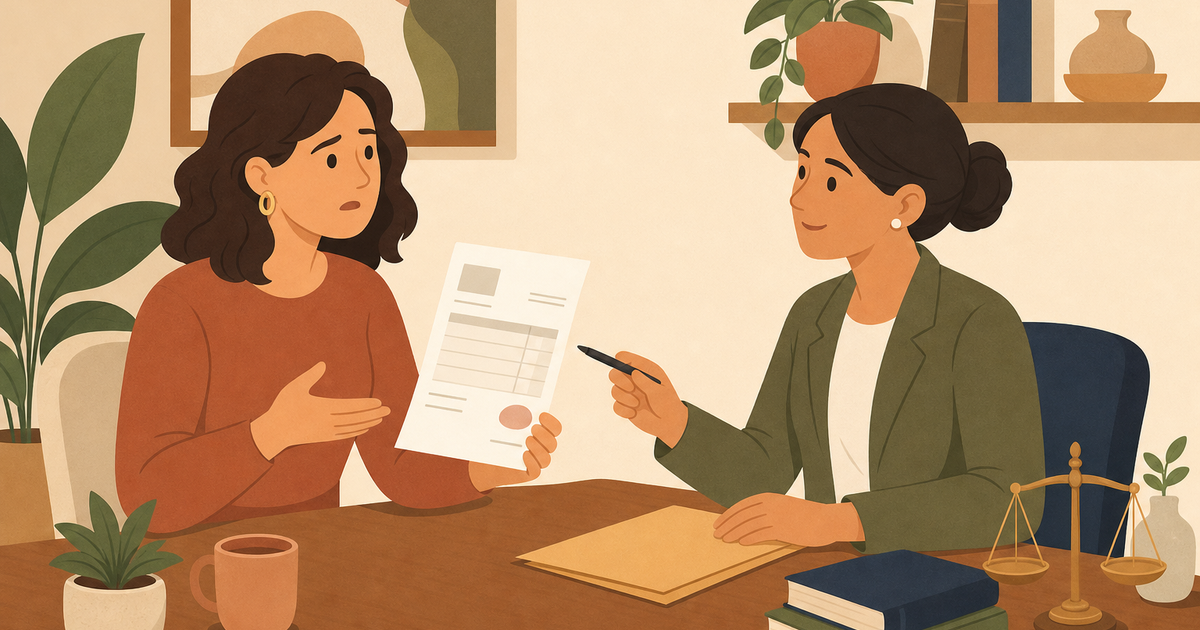
You did the work. You delivered the goods, finished the renovation, or provided the service — and the invoice has gone unpaid for weeks, then months. The calls and emails go nowhere. For small business owners, contractors, and freelancers across the Greater Toronto Area, an unpaid debt is not just frustrating; it is money that should be in your account. Ontario's Small Claims Court exists to help you get it back.
Small Claims Court is a branch of the Superior Court of Justice designed to resolve monetary disputes quickly and affordably, without the cost and complexity of a full civil action. As of October 1, 2025, the monetary limit increased to $50,000 — so a claim for an unpaid debt of $50,000 or less can be brought here. (You can still sue for a larger debt in Small Claims Court, but you give up the amount above the limit.)
It is built to be accessible: the procedures are streamlined, and you can be represented by a licensed paralegal rather than needing a lawyer for the full proceeding.
Before anything else, check your timing. Under Ontario's Limitations Act, 2002, the general limitation period is two years — in most cases you have two years from when the claim was discovered to start your action. Waiting too long can extinguish an otherwise solid claim, so an unpaid invoice is not something to leave sitting indefinitely.
The path through Small Claims Court typically follows a clear sequence:
Debt claims are won on paper. A signed contract or work order, clear invoices, proof of delivery, and a record of your demands for payment make a claim straightforward. Gaps in that paper trail are where disputes arise. Organizing your documentation early — and understanding what the court will want to see — often makes the difference between a quick recovery and a drawn-out fight.
Winning a judgment is not the same as having the money in hand. If the defendant still does not pay, there are enforcement tools — such as garnishing wages or a bank account — to collect on the judgment. Thinking about whether the debtor actually has assets to collect from is part of deciding whether the claim is worth pursuing in the first place.
An unpaid debt does not have to be written off. Small Claims Court is designed for exactly this situation, but the rules around limitation periods, filing, and enforcement reward people who get organized and get advice early. A licensed paralegal can assess the strength of your claim and handle the process so you can keep running your business.
This article is general information only and is not legal advice. Every case turns on its own facts.
When a client or customer will not pay, WP Legal Professional can help you recover what you are owed. Our licensed paralegals represent clients in Small Claims Court across the Greater Toronto Area — from filing through settlement conference to trial — and we serve clients in English, Cantonese, Mandarin, and Korean.
Act now. Contact us for a confidential consultation, or learn more about our small claims services.